Published: 08-12-2025
The thoughts and the people of Bangladesh
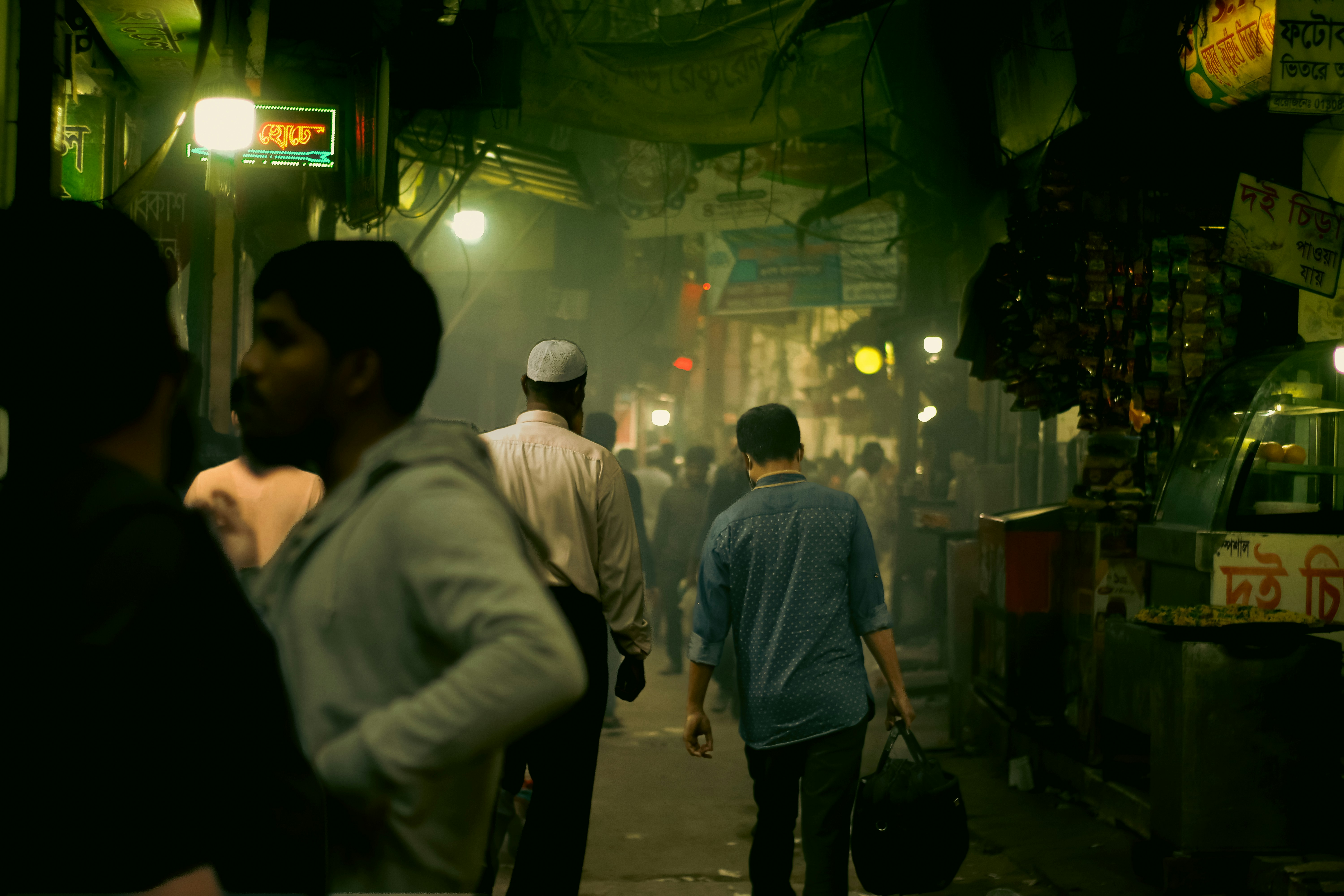
The mentality of many people in Bangladesh is extremely disappointing. When someone does something good, we become jealous instead of encouraging them. We are generous when it comes to promoting negativity, but we hesitate to appreciate and uplift others. A wife often cannot tolerate her in-laws—she becomes irritated even when asked to cook or take care of them. Even if she manages to endure it, she goes to her mother’s house and shares everything with a twisted mindset. A friend cannot even tolerate another friend’s childish talk for more than a few minutes. You can easily see the absence of civic awareness the moment you step onto the streets or crowded places.
As a nation, we are neither sophisticated nor civilized. When a beautiful teacher enters the classroom, many boys behave like dogs, practically drooling, and try to sit closer just to ogle her from top to bottom. People have turned into zombies—hospitality barely exists anymore. Everything is artificial, including human interactions. People don’t keep their promises. The moment someone rises a little higher, they start feeling superior and can’t tolerate others. They never think that what benefits them might harm someone else. It’s fine to be self-centered to some extent, but being excessively self-centered destroys the social balance required for a functioning society.
Traditionally, in the Indian subcontinent, the student–teacher relationship was deep and inseparable. But today’s so-called students don’t even know how to talk respectfully to teachers, let alone show them genuine respect. Yet we proudly chant slogans like “Student Empowerment” and “Children are the future,” which seems laughable and unrealistic to me.
The culture of going to a teacher for extra understanding—what we now call “private tuition”—used to be respectful and disciplined. When I was younger, I saw how senior students behaved with manners during private lessons. Nowadays they behave rudely and without discipline. Instead of asking questions to expand their knowledge, students now focus on which boy or girl they can flirt with in class, or when the teacher will dismiss them early. Some even pressure teachers themselves.
A few things are very clear to me:-
Respect for teachers must be restored.
Until teachers receive fair respect and fair compensation, we will continue seeing viral videos of students assaulting teachers or teacher-protesters being beaten by police during salary movements.
You cannot run a country using slogans like “spirit of liberation war” or “July uprising.”
Neither will these create jobs. In a democratic country, either we accept foreign diplomatic influence or we strengthen our own military, economy, and
infrastructure. For that, we need a disciplined and sharp-minded young generation—like what we see in China, Russia, Israel, or even North Korea.
In Israel, joining the military after \(18\) is mandatory. Honestly, we need something similar even more. Young prodigies
in math, physics, programming, and hacking are trained and used to enhance national power and defense—something we see in Russia, China, Iran, and Israel. The teenage brain is at its sharpest during those years. As people grow older, worries increase, and the mind becomes
cluttered with “junk files.” Israel’s approach clearly plays a role in their dominance today. The essence is simple: regardless of age, whoever is skilled must be given respect and opportunities to flourish.
Without sincere student–teacher relationships and real educational reform, we will never stand tall as a nation.
In this broken education system, how many Jamal Nazrul Islams or Mahabub Majumders have we produced in the last 17 years? We don’t
even know how many students lost their lives to toxic competition, unable to express their true potential.
A nation does not become great merely through infrastructure and economic growth. The strongest nations are those rich in knowledge, innovation, moral values,
military strength, and spiritual ideals. If religious and moral values are removed, destruction becomes inevitable—history proves this clearly.
Human beings survive by holding onto a greater purpose.
Without the concept of a Creator, humanity would fall into chaos—just as a herd collapses without a shepherd. Even Judaism and Christianity compare God to a shepherd who guides His creation.
As long as a person maintains their religious foundations, they deviate less from moral paths.
Bangladesh, once rich in religious values, now has a youth generation where faith is faint and weak. Conflicts emerging “in the name of religion” are often sparked by third
parties. According to our grandparents, such hostility never existed before; Hindus and Muslims lived peacefully due to societal conservatism. Conservatism and adherence to fundamental principles keep people grounded in faith.
Despite Western influence on our constitution,
inheritance and divorce laws are still shaped heavily by Islamic Shariah because Bangladesh is a Muslim-majority country with Islam as the state religion.
People must understand their primary identity: Muslim, Hindu, Christian, Buddhist, or Indigenous—then Bengali. If you
question someone’s ethnicity, the reaction is mild. But question their religious identity, and their deepest emotions get triggered instantly. History confirms this.
Therefore, a Muslim-majority democratic nation needs laws that respect religious identity while ensuring
gender equality, human rights, and judicial fairness. The law must combine the best of both Shariah and modern systems.
However, many laws in our country don’t align with the values of the Muslim majority, because powerful anti-Islamic groups—though small in number—control
the backend.
Marriage law is a prime example. It is so strict and manipulated that young people are pushed away from marriage and toward Western lifestyles. Meanwhile, boys and girls in Bangladesh lose their chastity at \(12\) or \(13\) due to extreme exposure—yet nobody cares about
that. But the legal marriage age is set at \(21\) for boys and \(18\) for girls. The contradiction is absurd.
This decline leads to moral collapse—pornography addiction, masturbation, LGBTQ+ normalization, broken family ties, and boys who cannot respect their own mothers or sisters
dreaming of having wives. If someone cannot treat his sister or mother properly, how will he treat a wife?
When discussing Bangladesh’s problems, the word “uncivilized” naturally emerges.
The root cause is a lack of proper education and self-education—something Promoth Chowdhury highlighted \(100\) years ago. Knowledge gained joyfully cannot be taught through rigid
rules, because the self-driven learner explores endlessly, just as animals roam freely for food.
Why should someone be forced to learn what they don’t need, and kill their own dreams? People excel when they pursue what they love. But can anyone truly do that in Bengali
society? If someone steps outside the traditional system, can they still live a normal life? If they fail or break the conventional path, society doesn’t accept them.
To read the Bengali version of this article- Download as PDF